A dog that repeatedly shakes its head, scratches around its ears, or suddenly avoids having its head touched may be experiencing an ear problem that needs attention. While mild irritation can sometimes have a simple cause, persistent inflammation, unusual discharge, or significant pain may indicate an infection. Knowing when urgent vet care is necessary can help prevent further discomfort and protect your dog’s hearing and ear health.
Ear infections do not always look the same. Some dogs develop noticeable redness and discharge, while others show changes in behavior before physical symptoms become obvious. Paying attention to these differences can help you recognize when a veterinary examination is needed.
Why Dog Ear Infections Can Be Difficult to Recognize
Dogs cannot tell us when their ears hurt. Instead, they communicate discomfort through movements and behavioral changes. Some signs may appear during everyday activities, such as eating, playing, or resting.
Watch for these possible indicators:
- Repeated head shaking, particularly after waking up
- Scratching one ear more often than the other
- Rubbing the side of the face against carpets or furniture
- Redness or swelling around the ear opening
- Brown, yellow, or dark-colored discharge
- An unusual smell coming from the ears
- Pulling away when someone tries to touch the head
- Whining or becoming unusually irritable
A dog may display only one or two symptoms initially. However, symptoms that persist or become more noticeable should not be dismissed as ordinary itching.
When Ear Infection Symptoms Require Urgent Pet Care
The most important factor is how your dog is feeling and whether the symptoms are progressing. Mild irritation may allow time to arrange a routine examination, but certain warning signs call for prompt veterinary assessment.
Severe Ear Pain
A dog that cries, growls, or repeatedly pulls away when its ear is approached may be experiencing significant pain. Avoid forcing the ear open or attempting to clean it, as handling an inflamed area can make discomfort worse.
Swelling Around the Ear
Noticeable swelling around the ear canal or ear flap may indicate significant inflammation or another complication. A swollen ear flap can also develop when repeated head shaking damages small blood vessels, causing blood to collect beneath the skin.
Blood or Thick Discharge
Blood, pus-like discharge, or a sudden increase in ear fluid should be evaluated by a veterinarian. These changes may be associated with infection, injury, or damage to sensitive tissues.
Head Tilt or Loss of Balance
A persistent head tilt, stumbling, circling, or unusual eye movements may suggest that the condition involves deeper ear structures. These signs are more concerning than ordinary scratching and require immediate veterinary attention.
When these symptoms occur, urgent pet care can help determine the severity of the problem and whether additional diagnostics or treatment are needed.
What Causes Ear Infections to Develop?
An ear infection can involve bacteria, yeast, or a combination of microorganisms. However, these organisms are not always the original reason a dog’s ears become inflamed. Several underlying factors may create conditions that allow an infection to develop.
Allergies: Environmental or food-related allergies can affect the skin lining the ear canal. Repeated inflammation may make infections more likely.
Moisture buildup: Water retained after swimming or bathing can encourage microbial growth, particularly in dogs with limited airflow around the ear canal.
Foreign material: Grass seeds, dirt, and small plant fragments can become trapped inside the ear and cause irritation.
Ear anatomy: Dogs with narrow canals, heavy ear flaps, or excess hair around the ear opening may be more prone to moisture and debris accumulation.
Excessive wax: Some dogs produce more earwax than others. When buildup is combined with inflammation, it can contribute to discomfort and infection.
Understanding the underlying trigger is essential. If treatment addresses only the infection but not the contributing condition, symptoms may return.
Why Delaying Treatment Can Lead to Further Problems
An untreated ear infection can gradually affect more than the outer ear canal. Continued inflammation may cause the canal to become swollen and thickened, making it harder to examine and treat.
Potential complications include:
- Chronic inflammation: Repeated episodes can cause lasting changes to the ear canal.
- Ear hematoma: Frequent scratching or head shaking can damage blood vessels in the ear flap, creating a pocket of collected blood.
- Middle or inner ear involvement: Infection may extend deeper and affect balance or hearing.
- Persistent discomfort: Ongoing pain can interfere with sleep, grooming, eating, and normal activity.
Seeking urgent vet care when symptoms become severe or continue to worsen can help reduce the risk of these complications. Avoid waiting for an appointment if your dog develops sudden balance difficulties, severe pain, or significant swelling.
How a Veterinary Examination Identifies the Problem
Different ear conditions can produce similar symptoms, so a proper examination is important before selecting treatment.
Inspecting the Ear Canal
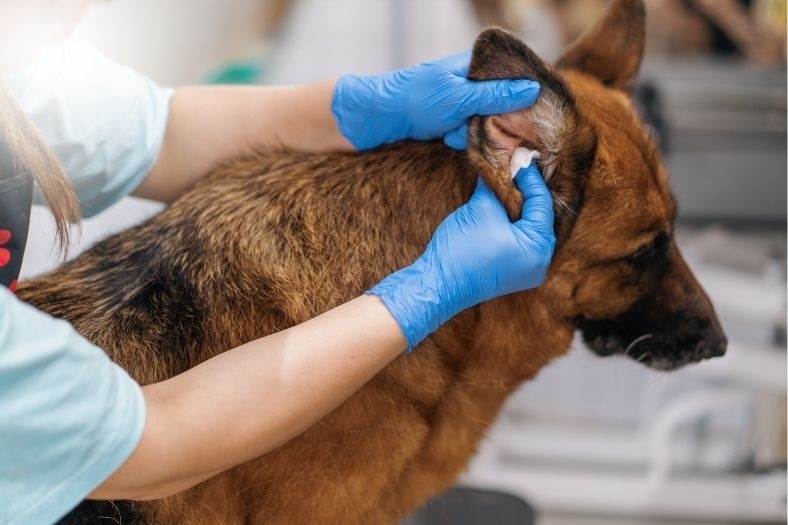
The veterinarian will examine the ear flap and canal for redness, swelling, discharge, wax buildup, and foreign material. An otoscope may be used to inspect deeper areas and assess the eardrum when it is visible.
Examining an Ear Sample
A small amount of discharge may be collected for microscopic examination. This can help identify yeast, bacteria, and inflammatory cells. If infections repeatedly return or do not respond to treatment, additional testing may be recommended.
Investigating Recurring Causes
When a dog experiences repeated infections, the veterinarian may consider allergies, skin conditions, and anatomical factors. Treatment may involve prescribed ear medication, appropriate cleaning instructions, and management of the underlying condition.
Never use leftover ear medication without professional guidance. Certain products may be unsuitable if the eardrum is damaged or the actual cause of the symptoms is unknown.
Supporting Your Dog’s Ear Health at Home
Good ear care involves regular observation rather than frequent or aggressive cleaning. Too much cleaning, or using the wrong products, may irritate sensitive tissue.
Consider these practical habits:
- Check your dog’s ears during routine grooming.
- Notice changes in odor, discharge, or skin color.
- Dry the outer ears gently after bathing or swimming.
- Use only cleaning solutions recommended by your veterinarian.
- Avoid inserting cotton swabs or other objects deep into the ear canal.
- Follow prescribed medication instructions carefully.
- Keep a record of previous infections and treatments.
A routine pet wellness exam also gives the veterinary team an opportunity to evaluate your dog’s ears and skin. Regular examinations can help identify early changes and provide an opportunity to discuss preventive care.
Veterinary Support for Dogs in High Point
Recurring ear problems can be uncomfortable and frustrating, especially when symptoms return after treatment. If you are looking for veterinary support in High Point, choose a practice that can examine the ear canal, perform appropriate diagnostic testing, and investigate the possible reasons behind persistent infections.
Pay attention to changes in your dog’s behavior and share details about previous episodes, medications, grooming habits, and possible allergies. This information can help guide a more effective treatment plan.
Schedule a Veterinary Appointment
If your dog has persistent itching, unusual ear discharge, or signs of discomfort, arrange an examination to identify the cause. Total Care Veterinary Hospital can help evaluate your dog’s symptoms and discuss an appropriate care plan. Use the hospital’s online booking option, if available, to request an appointment. If your dog has severe pain, sudden balance problems, or rapidly worsening symptoms, seek immediate veterinary attention rather than waiting for a routine visit.
Call Our Veterinary Team
Have questions about your dog’s ear symptoms? Call 336-841-8877 to discuss the changes you have noticed and ask about arranging an evaluation. Mention any head shaking, swelling, discharge, or previous treatment. If your dog is struggling to walk or appears severely distressed, seek prompt veterinary assessment.
Frequently Asked Questions
Q1. Can an ear infection make my dog less responsive to sounds?
Ans: Yes. Ear inflammation, discharge, and swelling may interfere with normal hearing. Infections involving deeper ear structures can sometimes cause more significant hearing changes. If your dog no longer responds to familiar sounds or seems confused when called, mention this change during the veterinary examination.
Q2. Why does my dog have an ear infection in only one ear?
Ans: One-sided infections can occur when a foreign object, localized injury, or another specific issue affects a single ear. Allergies and broader skin conditions may affect both ears, although symptoms may not appear equally. A veterinarian should examine both ears to determine whether the problem is localized or part of a wider condition.
Q3. Can ear infections affect a dog’s sleep?
Ans: Yes. Itching, pressure, and pain can make it difficult for a dog to settle comfortably. You may notice frequent waking, head shaking, or repeated scratching at night. If your dog’s sleep pattern changes alongside ear symptoms, an examination can help identify whether discomfort is responsible.
Q4. Should I stop my dog’s ear medication if the symptoms disappear?
Ans: No. Symptoms may improve before the infection has fully resolved. Stopping medication earlier than instructed can contribute to persistent or recurring problems. Follow the veterinarian’s directions and ask before making any changes, even if your dog appears comfortable again.
Q5. Can regular ear cleaning prevent every ear infection?
Ans: No. Cleaning may help manage wax and debris in some dogs, but it cannot prevent infections caused by allergies, anatomy, or other underlying conditions. Excessive cleaning can also irritate the ear canal. Ask your veterinarian how often your dog’s ears should be checked or cleaned.